O blood usage trends in the pediatric population 2015–2019 A multi-institutional analysis

O blood usage trends in the pediatric population 2015–2019 A multi-institutional analysis

Background
In 2019, AABB released the bulletin “Recommendations on the Use of Group O Red Blood Cells” in which the recommendations about pediatric and neonatal blood transfusions were limited. Eight U.S. pediatric hospitals sought to determine trends in pediatric group O blood use and clarify which pediatric populations receive group O blood transfusions despite a non-group O blood type.

Study Design and Methods
Eight U.S.-based institutions serving a pediatric population provided data from their respective Electronic Health Records. Data submitted included unit blood type, patient blood type, patient age, sex, and discharge diagnosis. If the discharge diagnosis was not available, the admitting diagnosis was substituted. GPT-4 was used to sort diagnoses into categories for analysis. Data were visualized using a series of alluvial plots, spaghetti plots, and tables. Tables were stratified on variables of interest (blood type, age, sex, diagnosis) to explore O blood type distribution among different patient populations.

Results
A total of 142,227 discrete transfusion events were identified, of which 52,731 recipients were non-O blood type. Overall, 35,575 transfusion events of O blood went to A, B, or AB blood type recipients (67%). Additionally, 26% of Rh(D) negative transfusion events went to recipients who were Rh(D) positive. Top diagnostic categories for receiving O blood type were cardiovascular disorders (22%) and sickle cell anemia (15%).

Discussion
This study highlights opportunities to address O blood supply challenges by identifying where non-O blood may be utilized safely in the vulnerable pediatric population.

Nine Diagnostics Joins American Cancer Society’s BrightEdge Entrepreneurs Program

Nine Diagnostics Joins American Cancer Society’s BrightEdge Entrepreneurs Program

Nine Diagnostics, a leader in AI-enabled nanosensor technology, has been selected to participate in the American Cancer Society’s BrightEdge Entrepreneurs Program, a highly selective initiative designed to accelerate the most promising oncology-focused startups. This selection marks another significant milestone for Nine Diagnostics as it continues to drive innovation in cancer treatment selection, dosing, optimization, and monitoring.

Nine Diagnostics

Nine Diagnostics

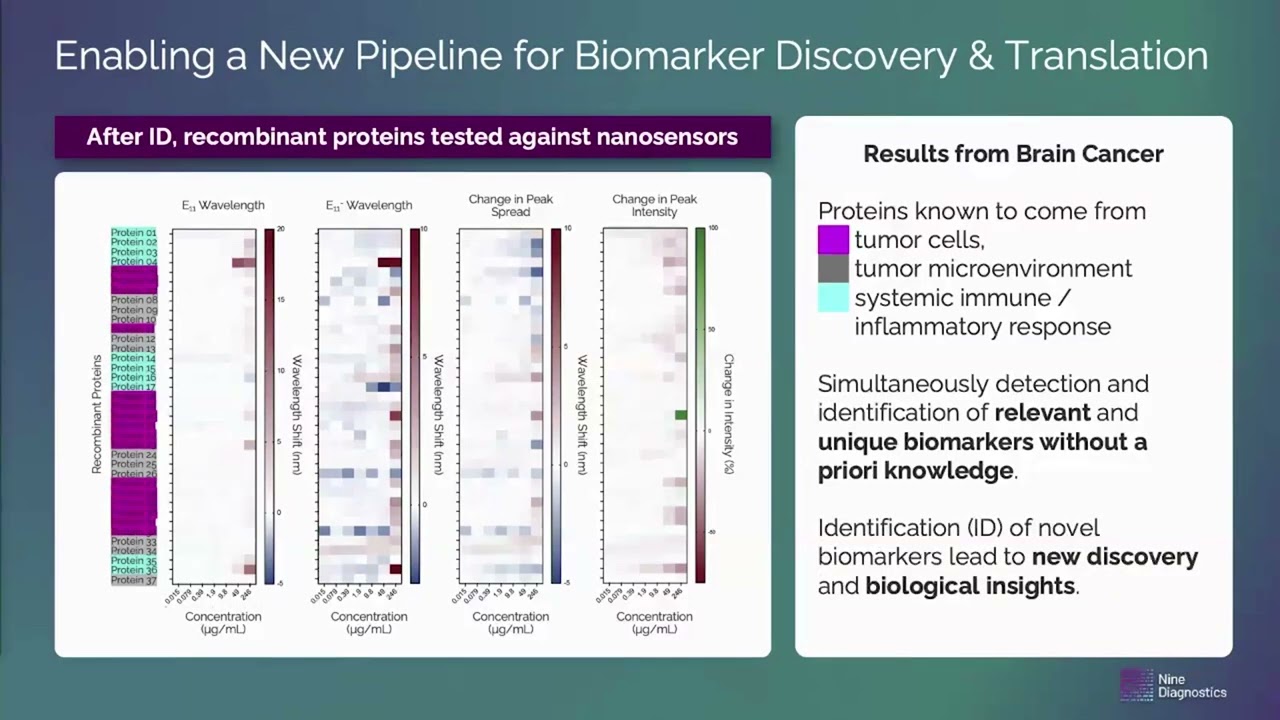
Determining treatment effectiveness, discovering new biology using AI enabled nanosensor technology.

A faster path to the most effective treatment with better outcomes. We develop holistic profiles based on a patient’s personal health data, demographics, social determinants of health, and other relevant factors pertinent to the ultimate outcomes.

Multidimensional datasets are acquired from fluorescent emissions using an array of nanoscale sensing elements that detect health abnormalities and signals of treatment effectiveness in small patient samples.

Role: Chief Executive Officer, Co-Founder

Molecular Recognition and In Vivo Detection of Temozolomide and 5-Aminoimidazole-4-carboxamide for Glioblastoma Using Near-Infrared Fluorescent Carbon Nanotube Sensors

Molecular Recognition and In Vivo Detection of Temozolomide and 5-Aminoimidazole-4-carboxamide for Glioblastoma Using Near-Infrared Fluorescent Carbon Nanotube Sensors

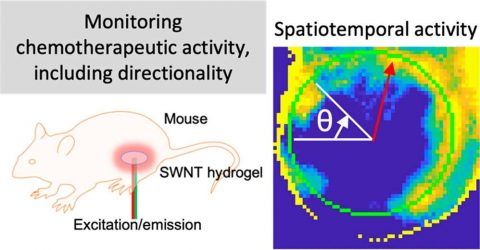
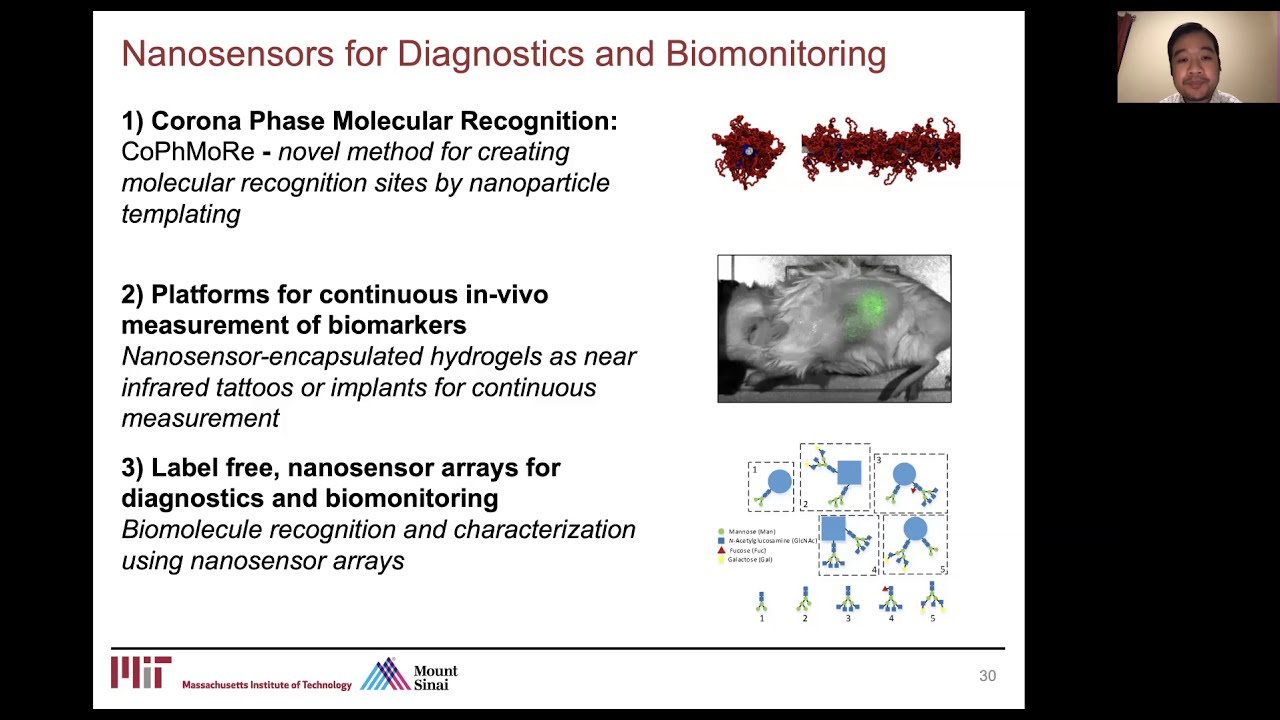
There is a pressing need for sensors and assays to monitor chemotherapeutic activity within the human body in real time to optimize drug dosimetry parameters such as timing, quantity, and frequency in an effort to maximize efficacy while minimizing deleterious cytotoxicity. Herein, we develop near-infrared fluorescent nanosensors based on single walled carbon nanotubes for the chemotherapeutic Temozolomide (TMZ) and its metabolite 5-aminoimidazole-4-carboxamide using Corona Phase Molecular Recognition as a synthetic molecular recognition technique. The resulting nanoparticle sensors are able to monitor drug activity in real-time even under in vivo conditions. Sensors can be engineered to be biocompatible by encapsulation in poly(ethylene glycol) diacrylate hydrogels. Selective detection of TMZ was demonstrated using U-87 MG human glioblastoma cells and SKH-1E mice with detection limits below 30 μM. As sensor implants, we show that such systems can provide spatiotemporal therapeutic information in vivo, as a valuable tool for pharmacokinetic evaluation. Sensor implants are also evaluated using intact porcine brain tissue implanted 2.1 cm below the cranium and monitored using a recently developed Wavelength-Induced Frequency Filtering technique. Additionally, we show that by taking the measurement of spatial and temporal analyte concentrations within each hydrogel implant, the direction of therapeutic flux can be resolved. In all, these types of sensors enable the real time detection of chemotherapeutic concentration, flux, directional transport, and metabolic activity, providing crucial information regarding therapeutic effectiveness.

Emerging technologies in cancer detection

Emerging technologies in cancer detection

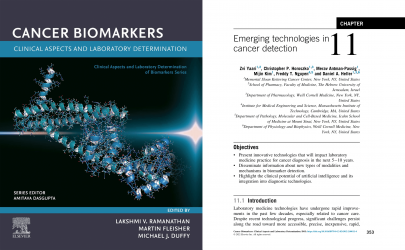
Exciting, modern technologies for cancer detection are under development in academic and industrial laboratories worldwide. This chapter provides a synopsis of technologies reaching greater importance as they advance toward clinical practice. These methods include significant advances in current methods as well as fundamentally new platforms. We place a special emphasis on point-of-care technologies for use in clinical settings as well as novel methods for use as at-home measurements and wearable devices. We also provide a synopsis on the involvement of artificial intelligence-based data analytics such as machine learning algorithms in both existing and developing assessments.

Cancer Research: DNA-SWCNT Biosensors Allow Real-Time Monitoring of Therapeutic Responses in Pancreatic Ductal Adenocarcinoma

Cancer Research: DNA-SWCNT Biosensors Allow Real-Time Monitoring of Therapeutic Responses in Pancreatic Ductal Adenocarcinoma

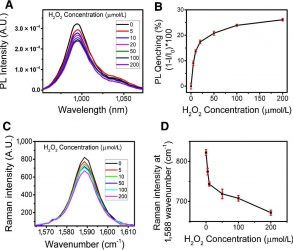
Pancreatic ductal adenocarcinoma (PDAC) is a highly desmoplastic cancer with limited treatment options. There is an urgent need for tools that monitor therapeutic responses in real time. Drugs such as gemcitabine and irinotecan elicit their therapeutic effect in cancer cells by producing hydrogen peroxide (HO). In this study, specific DNA-wrapped single-walled carbon nanotubes (SWCNT), which precisely monitor HO, were used to determine the therapeutic response of PDAC cells and tumors . Drug therapeutic efficacy was evaluated by monitoring HO differences using reversible alteration of Raman G-bands from the nanotubes. Implantation of the DNA-SWCNT probe inside the PDAC tumor resulted in approximately 50% reduction of Raman G-band intensity when treated with gemcitabine versus the pretreated tumor; the Raman G-band intensity reversed to its pretreatment level upon treatment withdrawal. In summary, using highly specific and sensitive DNA-SWCNT nanosensors, which can determine dynamic alteration of hydrogen peroxide in tumor, can evaluate the effectiveness of chemotherapeutics. SIGNIFICANCE: A novel biosensor is used to detect intratumoral hydrogen peroxide, allowing real-time monitoring of responses to chemotherapeutic drugs.