Skip to content
Freddy T. Nguyen, MD, PhD
Research Fellow @ Massachusetts Institute of Technology
CEO, Co-Founder @ Nine Diagnostics
Google Scholar
PubMed
ResearchGate
ORCID
Dimensions.AI
Google Scholar
PubMed
ResearchGate
ORCID
Dimensions.AI
X-twitter
Linkedin
Instagram
Facebook
Threads
Home
About
News
Media
Press
Mentions
Publications
Peer-Reviewed
Reviews
Patents
White Papers
Innovation
Patents
Nine Diagnostics
Prevented Health
MIT Healthcare Innovation
MIT Hacking Racism Challenge
MIT COVID-19 Challenge
MIT Hacking Medicine
Project Prana Foundation
wePool.AI
Physician Scientist
American Physician Scientists Association
People
Home
About
News
Media
Press
Mentions
Publications
Peer-Reviewed
Reviews
Patents
White Papers
Innovation
Patents
Nine Diagnostics
Prevented Health
MIT Healthcare Innovation
MIT Hacking Racism Challenge
MIT COVID-19 Challenge
MIT Hacking Medicine
Project Prana Foundation
wePool.AI
Physician Scientist
American Physician Scientists Association
People
Photonics
Fluorescence Spectroscopy
Optical Coherence Tomography
Raman Spectroscopy
Photonics
Fluorescence Spectroscopy
Optical Coherence Tomography
Raman Spectroscopy
Nanotechnology
Carbon Nanotubes
Contrast Agents
Nanotechnology
Carbon Nanotubes
Contrast Agents
Medicine
Cancer
Transfusion Medicine
Medicine
Cancer
Transfusion Medicine
Physician-scientist developing biophotonics and nano technologies for functional precision medicine to provide the right treatment to the right patient at the right time.
Reviews
Emerging technologies in cancer detection
June 17, 2022
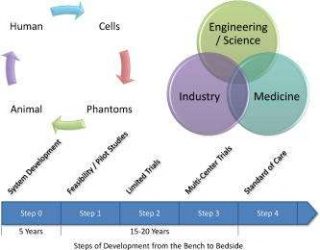
Optical coherence tomography: a review of clinical development from bench to bedside
September 1, 2007