O blood usage trends in the pediatric population 2015–2019 A multi-institutional analysis

O blood usage trends in the pediatric population 2015–2019 A multi-institutional analysis

Background
In 2019, AABB released the bulletin “Recommendations on the Use of Group O Red Blood Cells” in which the recommendations about pediatric and neonatal blood transfusions were limited. Eight U.S. pediatric hospitals sought to determine trends in pediatric group O blood use and clarify which pediatric populations receive group O blood transfusions despite a non-group O blood type.

Study Design and Methods
Eight U.S.-based institutions serving a pediatric population provided data from their respective Electronic Health Records. Data submitted included unit blood type, patient blood type, patient age, sex, and discharge diagnosis. If the discharge diagnosis was not available, the admitting diagnosis was substituted. GPT-4 was used to sort diagnoses into categories for analysis. Data were visualized using a series of alluvial plots, spaghetti plots, and tables. Tables were stratified on variables of interest (blood type, age, sex, diagnosis) to explore O blood type distribution among different patient populations.

Results
A total of 142,227 discrete transfusion events were identified, of which 52,731 recipients were non-O blood type. Overall, 35,575 transfusion events of O blood went to A, B, or AB blood type recipients (67%). Additionally, 26% of Rh(D) negative transfusion events went to recipients who were Rh(D) positive. Top diagnostic categories for receiving O blood type were cardiovascular disorders (22%) and sickle cell anemia (15%).

Discussion
This study highlights opportunities to address O blood supply challenges by identifying where non-O blood may be utilized safely in the vulnerable pediatric population.

Laser Fluence Dependent Modulation of Single Walled Carbon Nanotube Photoluminescence

Laser Fluence Dependent Modulation of Single Walled Carbon Nanotube Photoluminescence

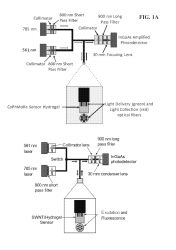
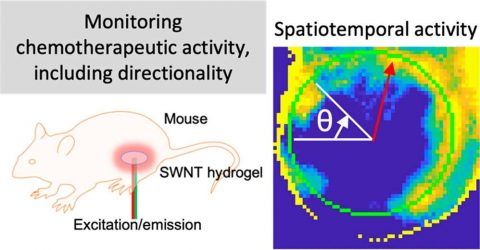
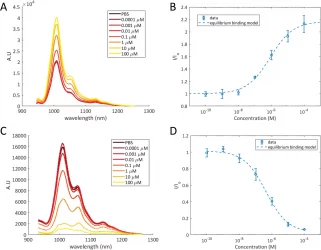
There is a pressing need for sensors and assays to monitor chemotherapeutic activity within the human body in real time to optimize drug dosimetry parameters such as timing, quantity, and frequency in an effort to maximize efficacy while minimizing deleterious cytotoxicity. Herein, we develop near-infrared fluorescent nanosensors based on single walled carbon nanotubes for the chemotherapeutic Temozolomide (TMZ) and its metabolite 5-aminoimidazole-4-carboxamide using Corona Phase Molecular Recognition as a synthetic molecular recognition technique. The resulting nanoparticle sensors are able to monitor drug activity in real-time even under in vivo conditions. Sensors can be engineered to be biocompatible by encapsulation in poly(ethylene glycol) diacrylate hydrogels. Selective detection of TMZ was demonstrated using U-87 MG human glioblastoma cells and SKH-1E mice with detection limits below 30 μM. As sensor implants, we show that such systems can provide spatiotemporal therapeutic information in vivo, as a valuable tool for pharmacokinetic evaluation. Sensor implants are also evaluated using intact porcine brain tissue implanted 2.1 cm below the cranium and monitored using a recently developed Wavelength-Induced Frequency Filtering technique. Additionally, we show that by taking the measurement of spatial and temporal analyte concentrations within each hydrogel implant, the direction of therapeutic flux can be resolved. In all, these types of sensors enable the real time detection of chemotherapeutic concentration, flux, directional transport, and metabolic activity, providing crucial information regarding therapeutic effectiveness.

Molecular Recognition and In Vivo Detection of Temozolomide and 5-Aminoimidazole-4-carboxamide for Glioblastoma Using Near-Infrared Fluorescent Carbon Nanotube Sensors

Molecular Recognition and In Vivo Detection of Temozolomide and 5-Aminoimidazole-4-carboxamide for Glioblastoma Using Near-Infrared Fluorescent Carbon Nanotube Sensors

There is a pressing need for sensors and assays to monitor chemotherapeutic activity within the human body in real time to optimize drug dosimetry parameters such as timing, quantity, and frequency in an effort to maximize efficacy while minimizing deleterious cytotoxicity. Herein, we develop near-infrared fluorescent nanosensors based on single walled carbon nanotubes for the chemotherapeutic Temozolomide (TMZ) and its metabolite 5-aminoimidazole-4-carboxamide using Corona Phase Molecular Recognition as a synthetic molecular recognition technique. The resulting nanoparticle sensors are able to monitor drug activity in real-time even under in vivo conditions. Sensors can be engineered to be biocompatible by encapsulation in poly(ethylene glycol) diacrylate hydrogels. Selective detection of TMZ was demonstrated using U-87 MG human glioblastoma cells and SKH-1E mice with detection limits below 30 μM. As sensor implants, we show that such systems can provide spatiotemporal therapeutic information in vivo, as a valuable tool for pharmacokinetic evaluation. Sensor implants are also evaluated using intact porcine brain tissue implanted 2.1 cm below the cranium and monitored using a recently developed Wavelength-Induced Frequency Filtering technique. Additionally, we show that by taking the measurement of spatial and temporal analyte concentrations within each hydrogel implant, the direction of therapeutic flux can be resolved. In all, these types of sensors enable the real time detection of chemotherapeutic concentration, flux, directional transport, and metabolic activity, providing crucial information regarding therapeutic effectiveness.

An Accessible, Efficient, and Accurate Natural Language Processing Method for Extracting Diagnostic Data from Pathology Reports

An Accessible, Efficient, and Accurate Natural Language Processing Method for Extracting Diagnostic Data from Pathology Reports

Analysis of diagnostic information in pathology reports for the purposes of clinical or translational research and quality assessment/control often requires manual data extraction, which can be laborious, time-consuming, and subject to mistakes.

Objective
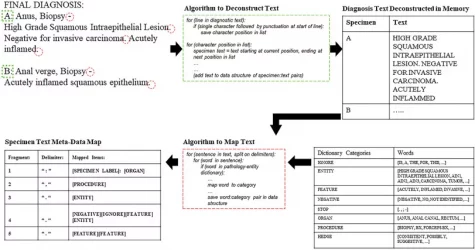
We sought to develop, employ, and evaluate a simple, dictionary- and rule-based natural language processing (NLP) algorithm for generating searchable information on various types of parameters from diverse surgical pathology reports.

Design
Data were exported from the pathology laboratory information system (LIS) into extensible markup language (XML) documents, which were parsed by NLP-based Python code into desired data points and delivered to Excel spreadsheets. Accuracy and efficiency were compared to a manual data extraction method with concordance measured by Cohen’s κ coefficient and corresponding P values.

Results
The automated method was highly concordant (90-100%, P<.001) with excellent inter-observer reliability (Cohen’s κ: 0.86-1.0) compared to the manual method in 3 clinicopathologic research scenarios, including squamous dysplasia presence and grade in anal biopsies, epithelial dysplasia grade and location in colonoscopic surveillance biopsies, and adenocarcinoma grade and amount in prostate core biopsies. Significantly, the automated method was 24-39 times faster and inherently contained links for each diagnosis to additional variables such as patient age, location, etc., which would require additional manual processing time. Conclusions A simple, flexible, and scaleable NLP-based platform can be used to correctly, safely, and quickly extract and deliver linked data from pathology reports into searchable spreadsheets for clinical and research purposes.

Emerging technologies in cancer detection

Emerging technologies in cancer detection

Exciting, modern technologies for cancer detection are under development in academic and industrial laboratories worldwide. This chapter provides a synopsis of technologies reaching greater importance as they advance toward clinical practice. These methods include significant advances in current methods as well as fundamentally new platforms. We place a special emphasis on point-of-care technologies for use in clinical settings as well as novel methods for use as at-home measurements and wearable devices. We also provide a synopsis on the involvement of artificial intelligence-based data analytics such as machine learning algorithms in both existing and developing assessments.

Nature Nanotechnology: A wavelength-induced frequency filtering method for fluorescent nanosensors in vivo

Nature Nanotechnology: A wavelength-induced frequency filtering method for fluorescent nanosensors in vivo

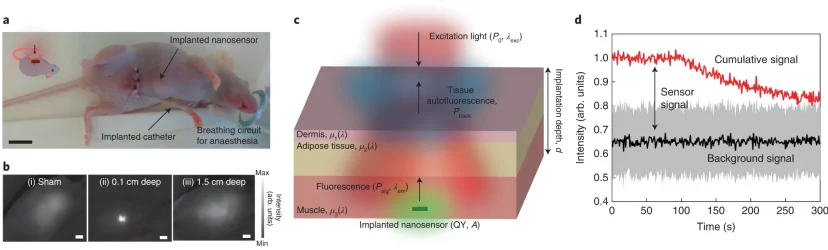
Fluorescent nanosensors hold the potential to revolutionize life sciences and medicine. However, their adaptation and translation into the in vivo environment is fundamentally hampered by unfavourable tissue scattering and intrinsic autofluorescence. Here we develop wavelength-induced frequency filtering (WIFF) whereby the fluorescence excitation wavelength is modulated across the absorption peak of a nanosensor, allowing the emission signal to be separated from the autofluorescence background, increasing the desired signal relative to noise, and internally referencing it to protect against artefacts. Using highly scattering phantom tissues, an SKH1-E mouse model and other complex tissue types, we show that WIFF improves the nanosensor signal-to-noise ratio across the visible and near-infrared spectra up to 52-fold. This improvement enables the ability to track fluorescent carbon nanotube sensor responses to riboflavin, ascorbic acid, hydrogen peroxide and a chemotherapeutic drug metabolite for depths up to 5.5 ± 0.1 cm when excited at 730 nm and emitting between 1,100 and 1,300 nm, even allowing the monitoring of riboflavin diffusion in thick tissue. As an application, nanosensors aided by WIFF detect the chemotherapeutic activity of temozolomide transcranially at 2.4 ± 0.1 cm through the porcine brain without the use of fibre optic or cranial window insertion. The ability of nanosensors to monitor previously inaccessible in vivo environments will be important for life-sciences research, therapeutics and medical diagnostics.

Nature Digital Medicine: Grass-roots entrepreneurship complements traditional top-down innovation in lung and breast cancer

Nature Digital Medicine: Grass-roots entrepreneurship complements traditional top-down innovation in lung and breast cancer

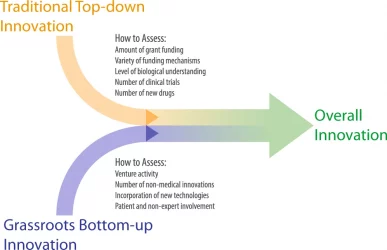
The majority of biomedical research is funded by public, governmental, and philanthropic grants. These initiatives often shape the avenues and scope of research across disease areas. However, the prioritization of disease-specific funding is not always reflective of the health and social burden of each disease. We identify a prioritization disparity between lung and breast cancers, whereby lung cancer contributes to a substantially higher socioeconomic cost on society yet receives significantly less funding than breast cancer. Using search engine results and natural language processing (NLP) of Twitter tweets, we show that this disparity correlates with enhanced public awareness and positive sentiment for breast cancer. Interestingly, disease-specific venture activity does not correlate with funding or public opinion. We use outcomes from recent early-stage innovation events focused on lung cancer to highlight the complementary mechanism by which bottom-up “grass-roots” initiatives can identify and tackle under-prioritized conditions.

Temporal Imaging of Live Cells by High-Speed Confocal Raman Microscopy

Temporal Imaging of Live Cells by High-Speed Confocal Raman Microscopy

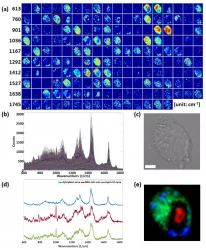
Label-free live cell imaging was performed using a custom-built high-speed confocal Raman microscopy system. For various cell types, cell-intrinsic Raman bands were monitored. The high-resolution temporal Raman images clearly delineated the intracellular distribution of biologically important molecules such as protein, lipid, and DNA. Furthermore, optical phase delay measured using quantitative phase microscopy shows similarity with the image reconstructed from the protein Raman peak. This reported work demonstrates that Raman imaging is a powerful label-free technique for studying various biomedical problems in vitro with minimal sample preparation and external perturbation to the cellular system.

Transcutaneous Measurement of Essential Vitamins Using Near-Infrared Fluorescent Single-Walled Carbon Nanotube Sensors

Transcutaneous Measurement of Essential Vitamins Using Near-Infrared Fluorescent Single-Walled Carbon Nanotube Sensors

Vitamins such as riboflavin and ascorbic acid are frequently utilized in a range of biomedical applications as drug delivery targets, fluidic tracers, and pharmaceutical excipients. Sensing these biochemicals in the human body has the potential to significantly advance medical research and clinical applications. In this work, a nanosensor platform consisting of single-walled carbon nanotubes (SWCNTs) with nanoparticle corona phases engineered to allow for the selective molecular recognition of ascorbic acid and riboflavin, is developed. The study provides a methodological framework for the implementation of colloidal SWCNT nanosensors in an intraperitoneal SKH1-E murine model by addressing complications arising from tissue absorption and scattering, mechanical perturbations, as well as sensor diffusion and interactions with the biological environment. Nanosensors are encapsulated in a polyethylene glycol diacrylate hydrogel and a diffusion model is utilized to validate analyte transport and sensor responses to local concentrations at the boundary. Results are found to be reproducible and stable after exposure to 10% mouse serum even after three days of in vivo implantation. A geometrical encoding scheme is used to reference sensor pairs, correcting for in vivo optical and mechanical artifacts, resulting in an order of magnitude improvement of p-value from 0.084 to 0.003 during analyte sensing.

Nature Digital Medicine: Rapid crowdsourced innovation for COVID-19 response and economic growth

Nature Digital Medicine: Rapid crowdsourced innovation for COVID-19 response and economic growth

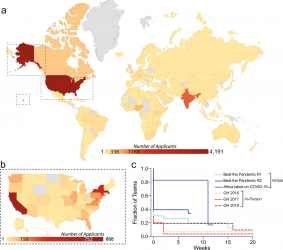
The COVID-19 pandemic has profoundly affected life worldwide. Governments have been faced with the formidable task of implementing public health measures, such as social distancing, quarantines, and lockdowns, while simultaneously supporting a sluggish economy and stimulating research and development (R&D) for the pandemic. Catalyzing bottom-up entrepreneurship is one method to achieve this. Home-grown efforts by citizens wishing to contribute their time and resources to help have sprouted organically, with ideas shared widely on the internet. We outline a framework for structured, crowdsourced innovation that facilitates collaboration to tackle real, contextualized problems. This is exemplified by a series of virtual hackathon events attracting over 9000 applicants from 142 countries and 49 states. A hackathon is an event that convenes diverse individuals to crowdsource solutions around a core set of predetermined challenges in a limited amount of time. A consortium of over 100 partners from across the healthcare spectrum and beyond defined challenges and supported teams after the event, resulting in the continuation of at least 25% of all teams post-event. Grassroots entrepreneurship can stimulate economic growth while contributing to broader R&D efforts to confront public health emergencies.