MIT COVID-19 Datathon: data without boundaries

MIT COVID-19 Datathon: data without boundaries

The COVID-19 virus is a formidable global threat, impacting all aspects of society and exacerbating the existing inequities of our current social systems. As we battle the virus across multiple fronts, data are critical for understanding this disease and for coordinating an effective global response. Given the current digitisation of so many aspects of life, we are amassing data that can be extrapolated and analysed for the effective forecasting, prevention and treatment of COVID-19. With responsible stewardship, the tools and data-driven solutions currently in development for the COVID-19 pandemic will serve in the present while providing a much-needed foundation for a data-based response to future outbreaks and disasters.

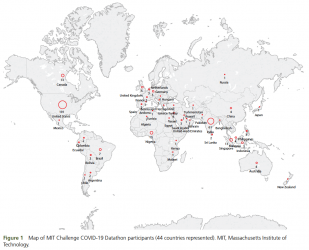
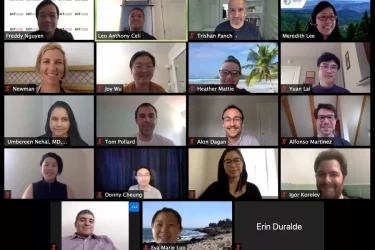
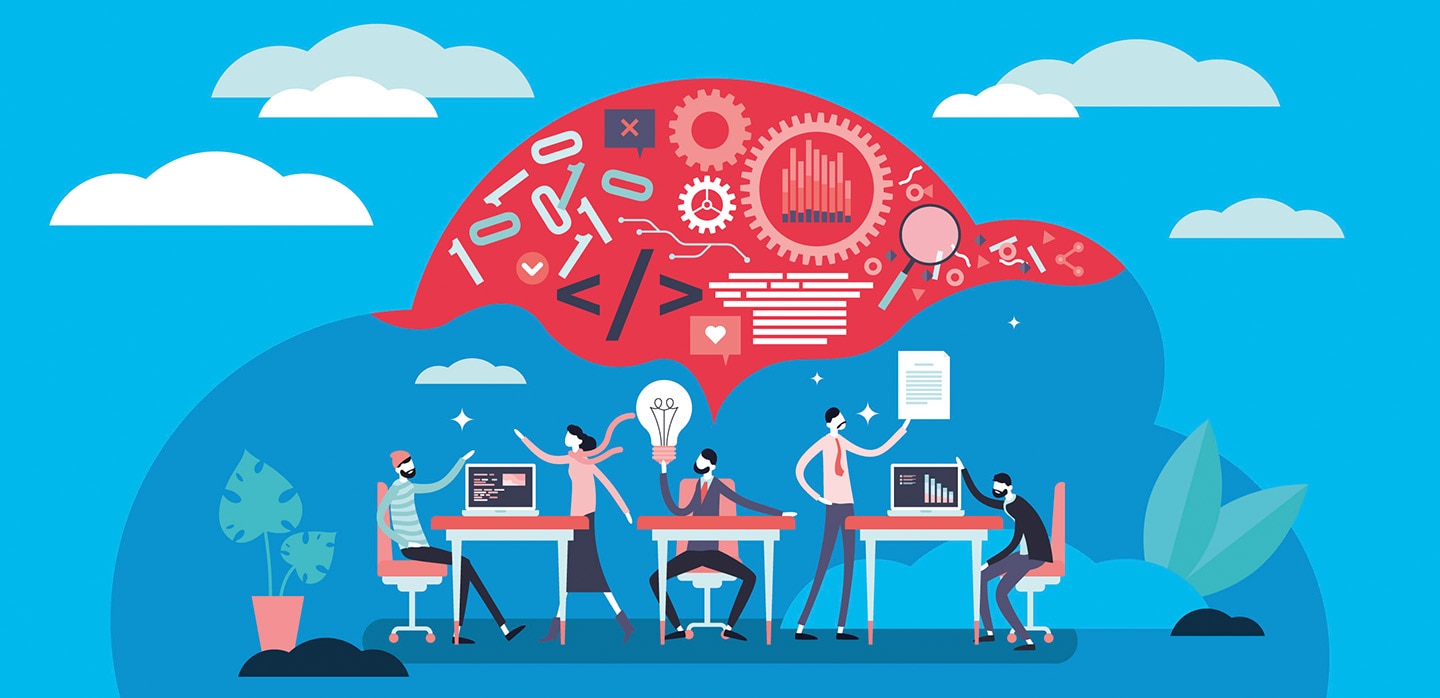
In response to COVID-19, and using data generated thus far, groups at the Massachusetts Institute of Technology (MIT) in partnership with the American Civil Liberties Union (ACLU) of Massachusetts, Google Cloud, Beth Israel Deaconess Medical Center (BIDMC) Innovations Group and Harvard Medical Faculty Physicians at BIDMC came together to host the MIT Challenge COVID-19 Datathon (COVID-19 Datathon) from 10–16 May 2020. A ‘datathon’ adopts the ‘hackathon’ model, with a focus on data and data science methodologies, which promotes collaboration, design thinking and problem solving. In a typical hackathon, participants with disparate but complementary backgrounds work together in small groups for a prescribed and intensive ‘sprint’, typically over the course of one weekend, to develop a new concept, product or business idea. Subject matter expert ‘mentors’’ oversee and advise the teams. At the conclusion of the event, the teams present to a panel of judges. Winners are selected and are typically awarded seed funding. Datathons differ from hackathons in that the output is data analysis. MIT Critical Data, one of the organising groups of the COVID-19 Datathon, has hosted 36 international healthcare datathons.

BIO Africa 2020 | Innovation & Collaboration in the Time of COVID-19 – Accelerating R&D to Save Lives

BIO Africa 2020 | Innovation & Collaboration in the Time of COVID-19 – Accelerating R&D to Save Lives

While no corner of the world has remained untouched by COVID-19, battling the pandemic is particularly challenging in resource-limited settings. In this session, learn how African countries are leveraging local and global technology and expertise to fight COVID-19. Hear about a Nigerian-American partnership that is using 3D printers to scale up personal protective equipment (PPE) production for African healthcare workers. Meet two leaders—one from a multinational pharmaceutical company, and one from a global engineering powerhouse—who are spearheading initiatives to catalyze innovative Africa-centric solutions to the pandemic. Listen to a scientist from the Rwandan Ministry of Health discuss her government’s technology-driven response to COVID-19—a response that has been heralded as a success story in the international press.

MIT News: What is the Covid-19 data tsunami telling policymakers?

MIT News: What is the Covid-19 data tsunami telling policymakers?

MIT News – Kim Martineau | MIT Quest for Intelligence – July 1, 2020

Uncertainty about the course of the Covid-19 pandemic continues, with more than 2,500,000 known cases and 126,000 deaths in the United States alone. How to contain the virus, limit its damage, and address the deep-rooted health and racial inequalities it has exposed are now urgent topics for policymakers. Earlier this spring, 300 data scientists and health care professionals from around the world joined the MIT Covid-19 Datathon to see what insights they might uncover.

“It felt important to be a part of,” says Ashley O’Donoghue, an economist at the Center for Healthcare Delivery Science at Beth Israel Deaconess Medical Center. “We thought we could produce something that might make a difference.”

Participants were free to explore five tracks: the epidemiology of Covid-19, its policy impacts, its disparate health outcomes, the pandemic response in New York City, and the wave of misinformation Covid-19 has spawned. After splitting into teams, participants were set loose on 20 datasets, ranging from county-level Covid-19 cases compiled by The New York Times to a firehose of pandemic-related posts released by Twitter.

“The People Who Develop a Ventilator that Costs $40,000 Are Probably Not the Best People to Go to to Make that Ventilator cost $400”

“The People Who Develop a Ventilator that Costs ,000 Are Probably Not the Best People to Go to to Make that Ventilator cost 0”

Ken Gordon – EPAM Continuum – June 25, 2020 – The Resonance Test 49: Dr. Freddy T. Nguyen and Duncan Freake

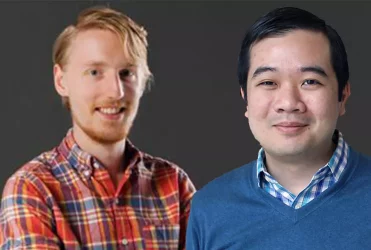
The COVID-19 pandemic has been a test for innovators. The immense challenges of the situation have called for fast, scalable solutions—and two of the more prominent approaches have come to the fore: open source and crowdsource. In this episode of The Resonance Test, we interrogate some people who’ve played essential roles here. Dr. Freddy T. Nguyen, Co-Director of the MIT COVID-19 Challenge, Arnold O. Beckman Postdoctoral Fellow at MIT, and a Pathology Resident at Mount Sinai Hospital, has done tremendous work convening teams from across the globe to crowdsource pandemic-related innovation. His conversation partner is EPAM Continuum’s Duncan Freake, a mechanical engineer who is one of the brains behind the GENTL Mask, our open source design that employs readily available materials and a simple manufacturing process to enable localized manufacturing. Our Ken Gordon peppers the duo with questions and gets some really interesting responses, giving us an important look at how partnerships, humility, and especially networks functioned in their pandemic projects. “The value of a network is really investing in good people who have the right spirit and the right motivations,” says Dr. Nguyen—and we think that these words are not just true: They aptly describe both himself and Duncan.

Key Stakeholders Massachusetts and the Netherlands meet again in virtual session

Key Stakeholders Massachusetts and the Netherlands meet again in virtual session

June 23, 2020

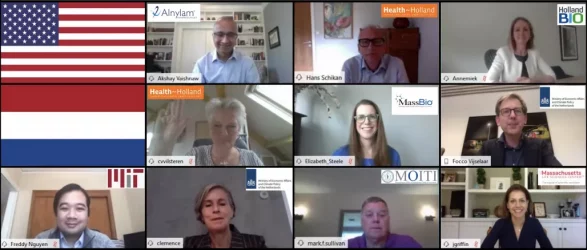
Two weeks ago, key stakeholders from Massachusetts and the Netherlands came together in a digital session to discuss how the Life Sciences & Health ecosystems are responding to COVID-19, which lessons could be learned from the reaction to the pandemic, and how to stimulate closer international collaboration.

COVID-19 Hackathon: Common Goals, Uncommon Solutions

COVID-19 Hackathon: Common Goals, Uncommon Solutions

Bayer – May 15, 2020

A medical face shield that monitors doctors digitally for signs of getting sick. A virtual waiting room app to help avoid spreading coronavirus germs among patients. A quick at-home kit with computerized support that could help consumers test and track their immune systems for antibodies against the virus that causes COVID-19. Bayer colleagues work across divisions, continents in COVID-19 hackathon.

These are just a few of the ideas developed by Bayer employees at a recent coronavirus hackathon put on by Massachusetts Institute of Technology and sponsored in part by Bayer’s crop science division, which had so many interested employees it held a spillover extension hackathon complete with its own judging and awards.

While scientists around the world are working to find ways to fight the coronavirus, dozens of experts from Bayer participated in the hackathon to help develop fast, implementable solutions to help slow the spread of the virus and the disease it causes.