Forbes: How Covid-19 Changed MIT’s Global Hackathon Program And Others For The Better, Forever

Forbes: How Covid-19 Changed MIT’s Global Hackathon Program And Others For The Better, Forever

Forbes – Michelle Greenwald – September 1, 2021

Engineers often state that constraints foster creativity, and the adage “necessity is the mother of invention” was never more true than after COVID-19 hit.  MIT’s healthcare hackathon program, pioneered by MIT Hacking Medicine, was forced to pivot quickly from 100% in person, to 100% virtual on a global level.  In the process, lessons were learned that can permanently improve hackathon processes in other sectors. 

Freddy Nguyen, Former Co-Director of MIT Hacking Medicine, a physician, scientist, bioengineer, physical chemist, and innovator, who works currently with both MIT and Mount Sinai, shared modifications and improvements to the program design and launch of the MIT COVID-19 Challenge in response to COVID constraints, many of which will endure.  Global hackathons across sectors can benefit from his team’s experiments and learnings.

Temporal Imaging of Live Cells by High-Speed Confocal Raman Microscopy

Temporal Imaging of Live Cells by High-Speed Confocal Raman Microscopy

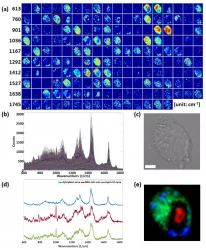
Label-free live cell imaging was performed using a custom-built high-speed confocal Raman microscopy system. For various cell types, cell-intrinsic Raman bands were monitored. The high-resolution temporal Raman images clearly delineated the intracellular distribution of biologically important molecules such as protein, lipid, and DNA. Furthermore, optical phase delay measured using quantitative phase microscopy shows similarity with the image reconstructed from the protein Raman peak. This reported work demonstrates that Raman imaging is a powerful label-free technique for studying various biomedical problems in vitro with minimal sample preparation and external perturbation to the cellular system.

Transcutaneous Measurement of Essential Vitamins Using Near-Infrared Fluorescent Single-Walled Carbon Nanotube Sensors

Transcutaneous Measurement of Essential Vitamins Using Near-Infrared Fluorescent Single-Walled Carbon Nanotube Sensors

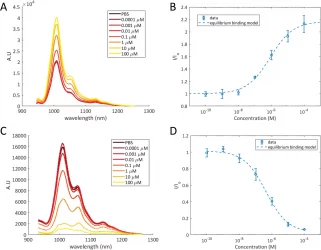
Vitamins such as riboflavin and ascorbic acid are frequently utilized in a range of biomedical applications as drug delivery targets, fluidic tracers, and pharmaceutical excipients. Sensing these biochemicals in the human body has the potential to significantly advance medical research and clinical applications. In this work, a nanosensor platform consisting of single-walled carbon nanotubes (SWCNTs) with nanoparticle corona phases engineered to allow for the selective molecular recognition of ascorbic acid and riboflavin, is developed. The study provides a methodological framework for the implementation of colloidal SWCNT nanosensors in an intraperitoneal SKH1-E murine model by addressing complications arising from tissue absorption and scattering, mechanical perturbations, as well as sensor diffusion and interactions with the biological environment. Nanosensors are encapsulated in a polyethylene glycol diacrylate hydrogel and a diffusion model is utilized to validate analyte transport and sensor responses to local concentrations at the boundary. Results are found to be reproducible and stable after exposure to 10% mouse serum even after three days of in vivo implantation. A geometrical encoding scheme is used to reference sensor pairs, correcting for in vivo optical and mechanical artifacts, resulting in an order of magnitude improvement of p-value from 0.084 to 0.003 during analyte sensing.

Nature Digital Medicine: Rapid crowdsourced innovation for COVID-19 response and economic growth

Nature Digital Medicine: Rapid crowdsourced innovation for COVID-19 response and economic growth

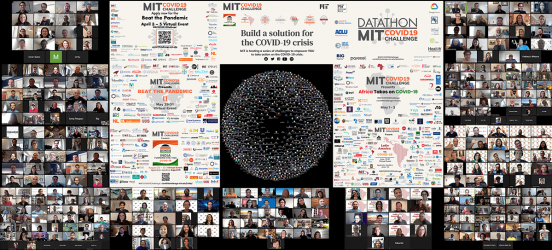
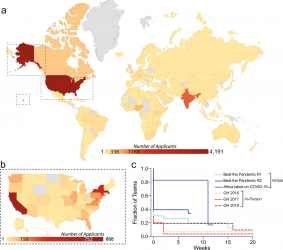
The COVID-19 pandemic has profoundly affected life worldwide. Governments have been faced with the formidable task of implementing public health measures, such as social distancing, quarantines, and lockdowns, while simultaneously supporting a sluggish economy and stimulating research and development (R&D) for the pandemic. Catalyzing bottom-up entrepreneurship is one method to achieve this. Home-grown efforts by citizens wishing to contribute their time and resources to help have sprouted organically, with ideas shared widely on the internet. We outline a framework for structured, crowdsourced innovation that facilitates collaboration to tackle real, contextualized problems. This is exemplified by a series of virtual hackathon events attracting over 9000 applicants from 142 countries and 49 states. A hackathon is an event that convenes diverse individuals to crowdsource solutions around a core set of predetermined challenges in a limited amount of time. A consortium of over 100 partners from across the healthcare spectrum and beyond defined challenges and supported teams after the event, resulting in the continuation of at least 25% of all teams post-event. Grassroots entrepreneurship can stimulate economic growth while contributing to broader R&D efforts to confront public health emergencies.

MIT COVID-19 Challenge

MIT COVID-19 Challenge

The MIT COVID-19 Challenge harnessed the passion, enthusiasm and expertise of thousands of innovators world-wide via a series of virtual hackathons that resulted in initiatives that address the many challenges related to COVID-19. The MIT COVID-19 Challenge was launched in March 2020 at the beginning of the COVID-19 pandemic. This initiative was built by members of the MIT community with the foundational support of the MIT Innovation Initiative, Martin Trust Center for Entrepreneurship, and MIT Hacking Medicine.

Role: Co-Founder (2020), Co-Director