HIMSS TV: MIT creates challenge to ‘hack’ COVID-19

MIT creates challenge to ‘hack’ COVID-19
The MIT COVID-19 Challenge searches for ideas to fight the coronavirus via hackathons and virtual events.
MIT Catalysts: Freddy Nguyen

Hosted by Julia Yoo – April 7, 2020
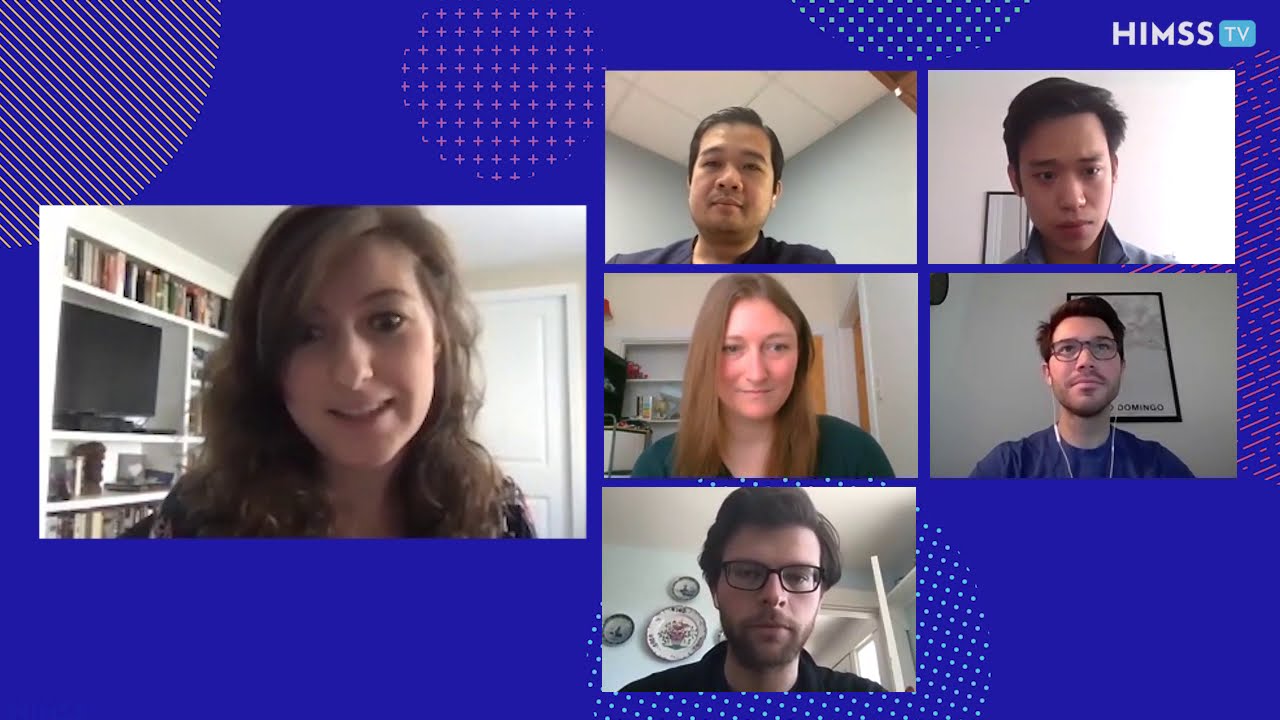
In the first of a special series about MIT community members on the front lines of the COVID-19 pandemic, host Julia Yoo sits down with Dr. Freddy Nguyen, a postdoctoral fellow at MIT and a resident physician at Mount Sinai Hospital. Nguyen talks about the MIT COVID19 Challenge and being on the front lines of the COVID-19 pandemic in New York.
AbelsonTaylor partners with the MIT COVID19 Challenge 48 Hour Hackathon

AbelsonTaylor – Danielle Jamil – April 7, 2020
The MIT COVID-19 Challenge came to life last weekend. The 48-hour virtual event hosted 1,500 hackers and created 238 teams to address COVID-19 challenges within 10 focus tracks. Participants came from over 96 countries and 49 states, each dealing with different stages of COVID-19 in their communities and made for a richly diverse array of proposed solutions.
Partners, sponsors and over 250 volunteer mentors worked the weekend to provide research and development resources to teams throughout. “The spirit of a healthcare hack is about democratizing innovation. We realize the potential of design thinking and distributive problem solving as a way to incite entrepreneurship. We want to help bring new approaches to some of the hardest human challenges.”, said Freddy Nguyen, MD, PHD, Co-Director MIT COVID-19 Challenge.
As a resident at Mount Sinai Hospital in New York City, Freddy is on the front lines of the global health pandemic. With only 3 weeks to plan, he and co-organizers Alfonso Martinez, Stephanie MacConnell, Paul Cheek realized that there was a serious need to initiate a virtual hackathon to address the current crisis, and the idea for the MIT COVID-19 Challenge was born.
Mobi Health News: New COVID-19 challenge out of MIT seeks solutions from hackers at home

Mobi Health News – Laura Lovett – April 06, 2020
The new MIT COVID-19 Challenge: Beat the Pandemic is a series of hackathons and digital events focused on coming up with ways to address the virus
With stay at home orders dominating the news cycle, many are looking for ways to help tackle the coronavirus pandemic from home. A group out of MIT is looking to remedy this with a way for various stakeholders to get involved.
Over the weekend, MIT COVID-19 Challenge: Beat the Pandemic hosted the first in a series of virtual hackathons and events aimed at designing new tools to address the virus.
MIT COVID-19 Challenge: Beat the Pandemic I – Awards
MIT COVID-19 Challenge: Beat the Pandemic I – Kickoff
MIT News: MIT’s entrepreneurial ecosystem steps up to the challenge of Covid-19

MIT News – Zach Winn – April 2, 2020
Entrepreneurial groups around the Institute have launched initiatives to address challenges brought on by the Covid-19 pandemic.
Innovation and entrepreneurship aren’t easy. New companies are forced to make due with minimal resources. Decisions must be made in the face of great uncertainty. Conditions change rapidly.
Perhaps unsurprisingly then, MIT’s I&E community has stepped up to the unforeseen challenges of the Covid-19 pandemic. Groups from many corners of the Institute are adapting to the myriad disruptions brought on by the emergency and spearheading efforts to help the people most affected.
MIT Hacking Medicine – San Francisco Grand Hack 2019
Cancer Research: DNA-SWCNT Biosensors Allow Real-Time Monitoring of Therapeutic Responses in Pancreatic Ductal Adenocarcinoma

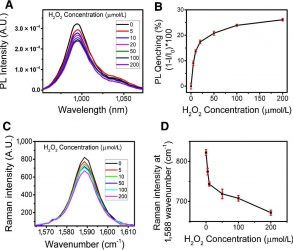
Pancreatic ductal adenocarcinoma (PDAC) is a highly desmoplastic cancer with limited treatment options. There is an urgent need for tools that monitor therapeutic responses in real time. Drugs such as gemcitabine and irinotecan elicit their therapeutic effect in cancer cells by producing hydrogen peroxide (HO). In this study, specific DNA-wrapped single-walled carbon nanotubes (SWCNT), which precisely monitor HO, were used to determine the therapeutic response of PDAC cells and tumors . Drug therapeutic efficacy was evaluated by monitoring HO differences using reversible alteration of Raman G-bands from the nanotubes. Implantation of the DNA-SWCNT probe inside the PDAC tumor resulted in approximately 50% reduction of Raman G-band intensity when treated with gemcitabine versus the pretreated tumor; the Raman G-band intensity reversed to its pretreatment level upon treatment withdrawal. In summary, using highly specific and sensitive DNA-SWCNT nanosensors, which can determine dynamic alteration of hydrogen peroxide in tumor, can evaluate the effectiveness of chemotherapeutics. SIGNIFICANCE: A novel biosensor is used to detect intratumoral hydrogen peroxide, allowing real-time monitoring of responses to chemotherapeutic drugs.
MIT News: Yearlong hackathon engages nano community around health issues Hacking Nanomedicine kicks off a series of events to develop an idea over time.

MIT News – MIT.nano – August 9, 2019
A traditional hackathon focuses on computer science and programming, attracts coders in droves, and spans an entire weekend with three stages: problem definition, solution development, and business formation.
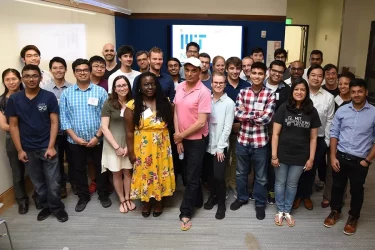
Hacking Nanomedicine, however, recently brought together graduate and postgraduate students for a single morning of hands-on problem solving and innovation in health care while offering networking opportunities across departments and research interests. Moreover, the July hackathon was the first in a series of three half-day events structured to allow ideas to develop over time.
Beckman Foundation: 2019 Beckman Symposium Recap Video
MIT Hacking Medicine – DC Grand Hack 2019