
Freddy Nguyen Chosen for an Arnold O. Beckman Postdoctoral Fellows Award

2015 PhD graduate awarded Beckman Postdoc Fellowship – March 30, 2017
Congratulations to Freddy Nguyen, a 2015 Illinois Chemistry PhD graduate, who was chosen for a prestigious Arnold O. Beckman Postdoctoral Fellows Award. Nguyen is a postdoctoral researcher at MIT working on development of nanosensors for in vivomonitoring of cancer therapeutics.
According to Nguyen, “The research I am planning to pursue is focused on the development of nanoscale molecular sensors for probing the tumor and its microenvironment. More specifically, we would like to implant our nanosensors inside tumors to to measure their response at the molecular level to various cancer therapies such as chemotherapeutics and radiation therapy. Our nanosensors are detected using near-infrared fluorescence and Raman spectroscopic techniques allowing us to probe the sensors from a distance using near-infrared light and are not susceptible to photobleaching effects unlike typical endogenous and exogenous fluorophores. These unique features of our nanosensors can allow us with a method to dynamically probe the tumor microenvironment in real-time and in-vivo. Patients currently have to wait until there are measurable size changes on CT or MRI scans or must undergo biopsies of the tumor to determine molecular changes in response to treatment. Having access to that molecularinformation within the first few days of treatment will be a tremendous step forward indetermining whether cancer treatments are working for each patient at a much earlier timeframe than the current standard of care. This allows for the patient and physician to morepromptly manage the treatment of their cancer.”
Investigating Effects of Proteasome Inhibitor on Multiple Myeloma Cells Using Confocal Raman Microscopy

Due to its label-free and non-destructive nature, applications of Raman spectroscopic imaging in monitoring therapeutic responses at the cellular level are growing. We have recently developed a high-speed confocal Raman microscopy system to image living biological specimens with high spatial resolution and sensitivity. In the present study, we have applied this system to monitor the effects of Bortezomib, a proteasome inhibitor drug, on multiple myeloma cells. Cluster imaging followed by spectral profiling suggest major differences in the nuclear and cytoplasmic contents of cells due to drug treatment that can be monitored with Raman spectroscopy. Spectra were also acquired from group of cells and feasibility of discrimination among treated and untreated cells using principal component analysis (PCA) was accessed. Findings support the feasibility of Raman technologies as an alternate, novel method for monitoring live cell dynamics with minimal external perturbation.
Beckman Laser Institute Seminar: Targeted Multi-Modal Protein Microspheres for Cancer Imaging
Optical coherence tomography and targeted multi-modal protein microspheres for cancer imaging

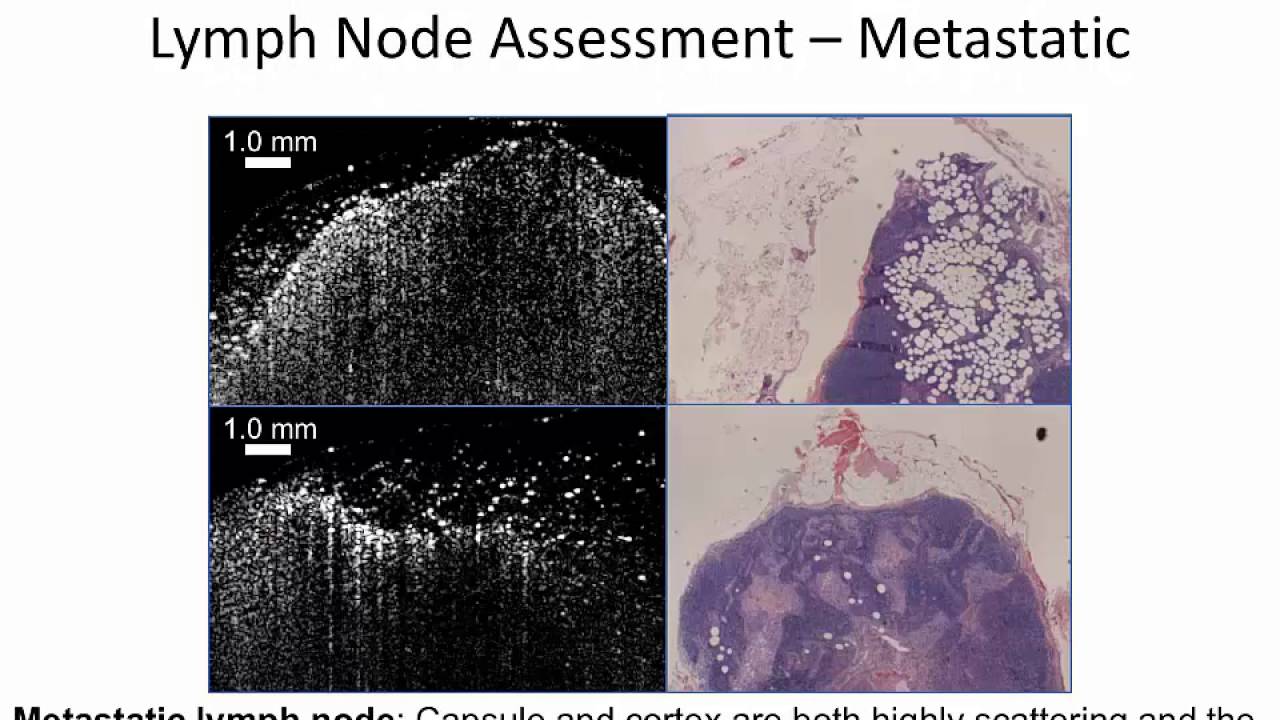
The field of biomedical optics has grown quickly over the last two decades as various technological advances have helped increase the acquisition speeds and the sensitivity limits of the technology. During this time, optical coherence tomography (OCT) has been explored for a wide number of clinical applications ranging from cardiology to oncology to primary care. In this thesis, I describe the design and construction of an intraoperative clinical OCT system that can be used to image and classify breast cancer tumor margins as normal, close, or positive. I also demonstrate that normal lymph nodes can be distinguished from reactive or metastatic lymph nodes by looking at the difference in scattering intensity between the cortex and the capsule of the node. Despite the advances of OCT in the detection and diagnosis of breast cancer, this technology is still limited by its field of view and can only provide structural information about the tissue. Structural OCT would benefit from added contrast via sub-cellular or biochemical components via the use of contrast agents and functional OCT modalities. As with most other optical imaging techniques, there is a trade off between the imaging field of view and the high-resolution microscopic imaging. In this thesis, I demonstrate for the first time that MM-OCT can be used as a complimentary technique to wide field imaging modalities, such as magnetic resonance imaging (MRI) or fluorescence imaging, using targeted multi-modal protein microspheres. By using a single contrast agent to bridge the wide field and microscopic imaging modalities, a wide field imaging technique can be used to initially localize the contrast agent at the site of interest to guide the location of the MM-OCT imaging to provide a microscopic view. In addition to multi-modal contrast, the microspheres were functionalized with RGD peptides that can target various cancer cell lines. The cancer cells readily endocytosed bound protein microspheres, revealing the possibility that these protein microspheres could also be used as therapeutic agents. These investigations furthered the utility of the OCT technology for cancer imaging and diagnosis.
Low-coherence interferometry and optical coherence tomography for image-guided surgical treatment of solid tumors
A method of forming an image of tissue. The method includes beginning an invasive procedure on a patient exposing tissue. The method then includes acquiring OCT data from the exposed tissue and converting the OCT data into at least one image. The method also includes ending the invasive procedure after the converting of the data.
High resolution live cell Raman imaging using subcellular organelle-targeting SERS-sensitive gold nanoparticles with highly narrow intra-nanogap

We report a method to achieve high speed and high resolution live cell Raman images using small spherical gold nanoparticles with highly narrow intra-nanogap structures responding to NIR excitation (785 nm) and high-speed confocal Raman microscopy. The three different Raman-active molecules placed in the narrow intra-nanogap showed a strong and uniform Raman intensity in solution even under transient exposure time (10 ms) and low input power of incident laser (200 μW), which lead to obtain high-resolution single cell image within 30 s without inducing significant cell damage. The high resolution Raman image showed the distributions of gold nanoparticles for their targeted sites such as cytoplasm, mitochondria, or nucleus. The high speed Raman-based live cell imaging allowed us to monitor rapidly changing cell morphologies during cell death induced by the addition of highly toxic KCN solution to cells. These results strongly suggest that the use of SERS-active nanoparticle can greatly improve the current temporal resolution and image quality of Raman-based cell images enough to obtain the detailed cell dynamics and/or the responses of cells to potential drug molecules.
Measuring uptake dynamics of multiple identifiable carbon nanotube species via high-speed confocal Raman imaging of live cells

Carbon nanotube uptake was measured via high-speed confocal Raman imaging in live cells. Spatial and temporal tracking of two cell-intrinsic and nine nanotube-derived Raman bands was conducted simultaneously in RAW 264.7 macrophages. Movies resolved single (n, m) species, defects, and aggregation states of nanotubes transiently as well as the cell position, denoted by lipid and protein signals. This work portends the real-time molecular imaging of live cells and tissues using Raman spectroscopy, affording multiplexing and complete photostability.
Targeted multi-modal protein microspheres for cancer imaging

Optical coherence tomography (OCT) is a novel technology that has been developed for various clinical applications from ophthalmology to oncology. OCT is analogous to ultrasound but with micron-scale resolution by using light waves instead of sound waves to provide detailed structural information at the cellular level. The development of contrast agents has been critical to the development of OCT and its functional modalities such as magneto-motive OCT (MM-OCT). MM-OCT is a modality of OCT in which a small external magnetic field is modulated on and off during imaging, providing an added dimension of contrast from the magnetic particle responses. Protein microspheres consisting of a hydrophobic oil core and a hydrophilic BSA protein shell provide the vehicle for a multi-modal contrast agent. The microspheres encapsulate iron oxide nanoparticles in the oil core, providing magnetic signal contrast, and dyes such as Nile Red and DiR iodide, providing fluorescence contrast. The outer surface is functionalized using a layer-by-layer adhesion process to attach RGD peptide sequences to target integrin receptors. Using dynamic light scattering, we found the size distribution of the microspheres to be between 1-5 µm. Under SEM and TEM, we were able to visualize the various layers and coatings, such as silica and RGD peptides, of the microsphere. The microspheres were optimized to maximize the magnetic contrast under MM-OCT and MRI, and the fluorescent contrast under a dark box fluorescence imaging system, and fluorescence microscopy. These studies validated the use of MM-OCT as a method for quantifying the relative amount of iron oxide and the relative number of microspheres in the samples. To address the binding specificity and sensitivity of the RGD coated microspheres to the integrin receptors, the microspheres were incubated with cell lines of varying expression levels of the alpha(v)beta(3) integrin receptor and visualized under fluorescence microscopy. The cell lines used in this study included a normal epithelial cell line: hTERT-HME1, and several human breast cancer cell lines: HCC38, SK-BR-3, MCF-7, ZR-75-1, MDA-MB-231, and MDA-MB-435S. These results were externally validated by quantification of the receptors using indirect immunohistochemical staining and flow cytometry. Preliminary results, using the multi-spectral dark box fluorescence imaging system, demonstrate the localization of the microspheres to the vasculature surrounding the tumor and to lymph nodes. This is highly suggestive of the microsphere’s selective binding to the vasculature. By combining the benefits of these various imaging modalities in a single agent, it becomes possible to use a wide-field imaging method such as MRI or small animal fluorescence imaging to initially locate the agents in-vivo, to use MM-OCT to provide micron scale resolution structural images in-vivo, and to use fluorescence microcopy to confirm the localization of these particles ex-vivo.
Magnetomotive optical coherence microscopy for cell dynamics and biomechanics

Magnetomotive microscopy techniques are introduced to investigate cell dynamics and biomechanics. These techniques are based on magnetomotive transducers present in cells and optical coherence imaging techniques. In this study, magnetomotive transducers include magnetic nanoparticles (MNPs) and fluorescently labeled magnetic microspheres, while the optical coherence imaging techniques include integrated optical coherence (OCM)and multiphoton (MPM) microscopy,and diffraction phase microscopy (DPM). Samples used in this study are murine macrophage cells in culture that were incubated with magnetomotive transducers. MPMis used to visualize multifunctional microspheres based on their fluorescence, while magnetomotive OCM detects sinusoidal displacements of the sample induced by a magnetic field. DPM is used to image single cells at a lower frequency magnetic excitation, and with its Fourier transform light scattering (FTLS) analysis, oscillation amplitude is obtained, indicating the relative biomechanical properties of macrophage cells. These magnetomotive microscopy method shave potential to be used to image and measure cell dynamics and biomechanical properties. The ability to measure and understand biomechanical properties of cells and their microenvironments, especially for tumor cells, is of great importance and may provide insight for diagnostic and subsequently therapeutic interventions.
Targeted multifunctional multimodal protein-shell microspheres as cancer imaging contrast agents

PURPOSE: In this study, protein-shell microspheres filled with a suspension of iron oxide nanoparticles in oil are demonstrated as multimodal contrast agents in magnetic resonance imaging (MRI), magnetomotive optical coherence tomography (MM-OCT), and ultrasound imaging. The development, characterization, and use of multifunctional multimodal microspheres are described for targeted contrast and therapeutic applications.PROCEDURES: A preclinical rat model was used to demonstrate the feasibility of the multimodal multifunctional microspheres as contrast agents in ultrasound, MM-OCT and MRI. Microspheres were functionalized with the RGD peptide ligand, which is targeted to α(v)β₃ integrin receptors that are over-expressed in tumors and atherosclerotic lesions.RESULTS: These microspheres, which contain iron oxide nanoparticles in their cores, can be modulated externally using a magnetic field to create dynamic contrast in MM-OCT. With the presence of iron oxide nanoparticles, these agents also show significant negative T2 contrast in MRI. Using ultrasound B-mode imaging at a frequency of 30 MHz, a marked enhancement of scatter intensity from in vivo rat mammary tumor tissue was observed for these targeted protein microspheres.CONCLUSIONS: Preliminary results demonstrate multimodal contrast-enhanced imaging of these functionalized microsphere agents with MRI, MM-OCT, ultrasound imaging, and fluorescence microscopy, including in vivo tracking of the dynamics of these microspheres in real-time using a high-frequency ultrasound imaging system. These targeted oil-filled protein microspheres with the capacity for high drug-delivery loads offer the potential for local delivery of lipophilic drugs under image guidance.
Fourier Transform Light Scattering (FTLS) of Cells and Tissues

Fourier transform light scattering (FTLS) has been recently developed as a novel, ultrasensitive method for studying light scattering from inhomogeneous and dynamic structures. FTLS relies on quantifying the optical phase and amplitude associated with a coherent image field and propagating it numerically to the scattering plane. In this paper, we review the principle and applications of FTLS to static and dynamic light scattering from biological tissues and live cells. Compared with other existing light scattering techniques, FTLS has significant benefits of high sensitivity, speed, and angular resolution. We anticipate that FTLS will set the basis for disease diagnosis based on intrinsic tissue optical properties and provide an efficient tool for quantifying cell structures and dynamics.
Congressionally Directed Medical Research Programs – Breast Cancer Research Program

Freddy Nguyen, an M.D./Ph.D. student in Professor Stephen Boppart’s Biophotonics Imaging Laboratory, was awarded an FY07 BCRP
Predoctoral Traineeship Award to optimize the use of an innovative imaging technology, magnetomotive optical coherence tomography (MM-OCT), which can provide real-time microscopic analysis of tumor
cells. Specifically, Mr. Nguyen’s project is to develop and optimize protein microspheres as a multimodal contrast agent to be used in conjunction with MM-OCT.
Mr. Nguyen has focused on encapsulating iron oxide nanoparticles and fluorescent dyes into the inner cores of modified protein microspheres capable of specifically targeting tumor neovessels, which are the blood vessels that tumors form to support their rapid growth. Tumor neovessel specificity was achieved by coating the microspheres with an arginine-glycine-asparatate (RGD) peptide, which binds to the αvβ3 integrin receptor on the surface of tumor neovessel endothelial cells. Preliminary studies confirmed that the microspheres preferentially bind to the tumor cells because they overexpress αvβ3 integrins in vitro. The microspheres accumulated in the neoves- sels at the tumor sites when injected into tumor-bearing rats. Mr. Nguyen plans to further pur- sue the cancer-specific targeting of the protein microspheres as a potential diagnostic contrast agent as well as a therapeutic agent in the treatment of breast cancer.